
This guide has been verified by our Engineering Compliance Team to align with current OSHA 1910.179 and ASME B30.2 standards. It was last reviewed for technical accuracy on October 6, 2026.
Previous Blog: Embracing Smart Technologies in Hoist Operations
Selecting a hoist for a hazardous location starts with understanding the area classification. For Class I environments, the key question is often whether the space is Division 1 or Division 2. While those terms are sometimes discussed as product options, the distinction is not simply a purchasing preference. The appropriate Division is determined by facility conditions, the materials present and the conditions under which flammable gases or vapors may be present.
What Is a Class I Hazardous Location?
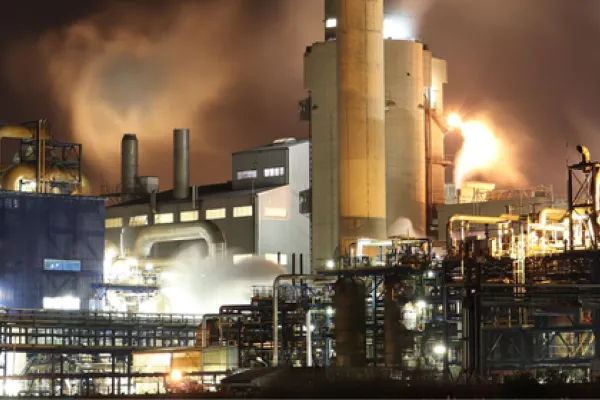
A Class I hazardous location is an area where flammable gases or vapors may be present in quantities sufficient to create an ignitable atmosphere. These environments are commonly found in industries such as chemical processing, oil and gas, paint and coatings, wastewater treatment, pharmaceuticals, fuel storage and certain manufacturing operations.
In a Class I location, electrical and mechanical equipment must be designed and selected to reduce the risk of ignition. Hoists used in these environments may require NEC-rated electrical components, electrical enclosures with explosion-proof fittings, spark-resistant components or other features appropriate to the classification.
Classification Comes from the Facility Conditions
A facility determines its NEC rating by conducting a formal area classification study which evaluates the types of flammable materials present and the likelihood of their release and exposure. Facilities may need to consult with governing safety standards, internal experts and local inspectors and authorities.
R&M or an R&M distributor can help align equipment with the documented NEC classification requirement, but the classification itself is based on the facility's conditions and governing standards. In other words, the question is not, "Do I want a Division 1 hoist or a Division 2 hoist?" The correct question is, "What is the classified area where the hoist will operate?"
What Defines Division 1?
Division 1 applies where flammable gases or vapors may be present under normal operating conditions. In Division 1, the hazardous atmosphere is not just a remote possibility; it is or is likely to be a part of normal operations.
For instance, a hoist positioned above an open vessel containing flammable vapors may require equipment suitable for Class I, Division 1 location if the atmosphere around the lifting equipment is classified accordingly. Similarly, a production area where flammable vapor may be released during normal processing may require equipment designed for a Class I, Division 1 location.
Examples of Division 1 Areas
Examples of potential Division 1 environments may include:
- Areas near open mixing tanks containing flammable solvents
- Locations where flammable liquids are transferred or dispensed
- Certain chemical processing zones
- Areas immediately around equipment where vapor release can occur during normal production
What Defines Division 2?
A Division 2 area is a location where flammable gases or vapors are not normally present in ignitable concentrations but could become present under abnormal conditions. These conditions may include accidental rupture, equipment failure, ventilation failure, leakage or an unexpected process upset.
Division 2 does not mean "no hazard." The hazardous atmosphere is not expected during normal operation. It could occur if something goes wrong. For example, if a hoist is installed near a closed process line that contains flammable vapors, but those vapors are not expected to escape during normal operation, the surrounding area may be classified as Class I, Division 2 depending on the facility's evaluation.
The hoist's components must be suitable for the classified area and designed to prevent ignition under the conditions defined by applicable standards. However, because the hazardous atmosphere is not expected to be present under normal operating conditions, the design requirements may differ from those used for Division 1 equipment.
Examples of Division 2 Areas
Examples of potential Division 2 environments may include:
- Areas adjacent to Division 1 zones
- Storage areas for sealed containers of flammable liquids
- Locations near closed piping systems that could leak
- Spaces where ventilation normally prevents vapor accumulation, but a failure could create a hazardous atmosphere
For facilities comparing Class I, Division 1 vs. Class I, Division 2 hoist requirements, the most important takeaway is that NEC classification drives equipment selection. With the right information in hand, R&M can help recommend equipment that aligns with the applicable requirements and actual operating environment. Contact us or find a distributor to start the conversation.

At R&M Materials Handling, Inc., our content is created to support end users and distributors with practical insights rooted in real-world applications. Each article is developed by the R&M Materials Handling team and shaped by the expertise of our engineers, product specialists and customer support professionals. Our goal is to answer common industry questions, share best practices and help readers get the most out of their lifting and materials handling systems.