
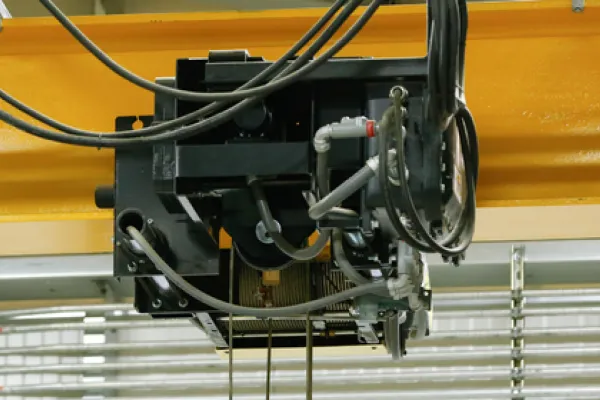
Previous Blog: Class I, Division 1 vs. Class I, Division 2 Hoists
Understanding the Class I classification for hazardous locations is an important first step when selecting lifting equipment for these environments. Class I hazardous locations are where flammable gases or vapors may be present in quantities that could create an ignition risk.
Hoists used in these areas require careful review because motors, brakes, switches, controls and other components can become potential ignition sources if the equipment is not properly rated for the application.
What Are Hazardous Location Classes?
In the United States, hazardous locations are commonly classified using the National Electrical Code (NEC) system. The NEC classification is composed of multiple parts:
- Class: Identifies the type of hazard
- Division: Indicates the likelihood that the hazard is present
- Group: Identifies the characteristics of the hazardous material
- Temperature Class (T-Code): Identifies the maximum permitted surface temperature
A complete rating is composed of all four things and looks like: Class I, Division 1, Groups C & D, Temperature Class T4.
This article focuses specifically on the Class portion of the National Electrical Code (NEC) hazardous location classification system. Hazardous location classes identify the general type of material that may be present, such as flammable gases or vapors, combustible dust or ignitable fibers and flyings.
The NEC hazardous location classes are:
- Class I: Flammable gases or vapors
- Class II: Combustible dust
- Class III: Ignitable fibers or flyings
R&M provides equipment for Class I hazardous locations. Equipment suitable for a Class I gas or vapor area is not automatically rated for combustible dust (Class II) or areas with ignitable fibers or flyings (Class III).
The NEC system also uses Divisions to indicate the frequency of the presence of the hazardous material:
- Division 1: The hazard is present intermittently or during normal operating conditions, or is highly likely to be present frequently because of maintenance, leakage or process conditions.
- Division 2: The hazard is not normally present during routine operation and would only be present under abnormal conditions, such as a spill, leak, equipment failure or container rupture.
The NEC rating uses Groups to define specific materials and their ignition characteristics.
| NEC Class | Group Atmospheres | Hazard Types & Examples |
|---|---|---|
| Class I | Group A | Acetylene (unique group due to its high explosion risk) |
| Class I | Group B | Hydrogen, butadiene or gases/vapors of equivalent hazard |
| Class I | Group C | Ethylene or gases/vapors of equivalent hazard |
| Class I | Group D | Propane, gasoline vapors, methane, butane, acetone, natural gas and similar gases/vapors |
| Class II* | Group E | Conductive metal dusts, including aluminum and magnesium dust |
| Class II* | Group F | Carbon dusts, including coal, carbon black, charcoal and coke dusts |
| Class II* | Group G | Agricultural dusts including grain, flour, starch, plastic and wood dusts |
| Class III* | NEC group designations not used | Ignitable fibers or flyings, such as textile fibers, cotton lint, flax, hemp, wood chips and similar materials |
*R&M only provides equipment for Class I hazardous locations.
Temperature Classes (T-Codes)
A Temperature Class (T-Code) identifies the maximum surface temperature equipment may reach under specified conditions. This matters because hazardous materials can ignite if they contact a surface hot enough to reach their autoignition temperature.
| Temperature Class | Maximum Surface Temperature |
|---|---|
| T1* | 842°F (450°C) |
| T2* | 572°F (300°C) |
| T3* | 392°F (200°C) |
| T4 | 275°F (135°C) |
| T5 | 212°F (100°C) |
| T6 | 185°F (85°C) |
*R&M only provides equipment up to Temperature Class T4.
Lower T-Code temperatures indicate equipment with a lower permitted maximum surface temperature. The required Temperature Class depends on the ignition characteristics of the gases or vapors present in the classified location.
Where Are Class I Locations?
Class I locations have a gas or vapor ignition risk. If a flammable atmosphere is present and an ignition source is introduced, fire, explosion, equipment damage or personnel injury can result.
Class I environments may be found in facilities such as:
- Chemical processing plants
- Paint and coating operations
- Petroleum refineries
- Fuel storage and dispensing areas
- Solvent handling or mixing rooms
- Wastewater treatment facilities
- Pharmaceutical manufacturing areas using alcohols or solvents
- Oil and gas production or processing sites
- Tank farms and transfer stations
- Laboratories or pilot plants
In these environments, hoists may be needed to lift pumps, valves, containers, tools, process equipment or maintenance loads. If the hoist operates within a classified area, the hoist specification must be reviewed against the site’s hazardous location classification.
One common misconception is that a facility is simply “hazardous” or “not hazardous.” In reality, classifications can vary by room, process line, elevation, ventilation and distance from the hazard source. One area of a plant may be Class I, Division 2, while another area may be unclassified or may require a different classification.
Another misconception is that Class I always means the most severe environment. Class I only describes the type of hazard: flammable gases or vapors. The Division describes the conditions under which that hazard may be present. A Class I, Division 1 location and a Class I, Division 2 location both involve gases or vapors, but the classifications reflect different conditions under which those hazards may be present.
Why Classification Matters for Hoist Selection
Hazardous location classification matters because the wrong hoist can introduce ignition risk into an environment where flammable materials may be present. Compliance with the NEC classification is necessary to meet safety regulations, under NFPA², ANSI³ and OSHA⁴ requirements, and facility classification requirements as determined by qualified engineers, safety managers, fire marshals and insurance underwriters.
For hazardous location certification, CSA⁵ evaluates the hoist as a complete piece of equipment rather than reviewing individual components in isolation. Motors, brakes, limit switches, pendants, contactors, wiring methods, enclosures and other components are assessed together to confirm the complete unit meets the applicable requirements. R&M equipment that successfully completes this review bears the CSA C/US certification mark in addition to the NEC hazardous location rating.
For help with a Class I hoist application, contact us or locate a distributor to discuss full hazardous location classification, lifting requirements and project details.
At R&M Materials Handling, Inc., our content is created to support end users and distributors with practical insights rooted in real-world applications. Each article is developed by the R&M Materials Handling team and shaped by the expertise of our engineers, product specialists and customer support professionals. Our goal is to answer common industry questions, share best practices and help readers get the most out of their lifting and materials handling systems.
Related Resources
Explore external resources and studies that provide additional insights on lifting safety and equipment.